

Rain squalls can trigger flash floods in both urban and rural settings. The intense downpours from squalls overwhelm drainage systems in cities, leading to rapid runoff on impermeable surfaces. In rural areas, steep terrains exacerbate runoff into low-lying regions, while saturated soils fail to absorb excess rain. Both settings face unique vulnerabilities that increase flood risks. Understanding these dynamics reveals key understandings into effective flood management and preparedness strategies for affected communities.
Main Points
- Rain squalls rapidly generate intense rainfall, overwhelming drainage systems in urban areas and leading to quick surface runoff and flash flooding.
- Urban environments with impermeable surfaces exacerbate flood risks as they prevent water absorption and increase runoff during rain squalls.
- In rural areas, natural topography and steep slopes channel water into low-lying regions, intensifying flooding during rain squalls.
- Soil saturation levels directly influence runoff; saturated soils during rain squalls cannot absorb additional rainfall, increasing the likelihood of flash floods.
- Effective emergency preparedness and infrastructure improvements are essential for managing flood risks in both urban and rural settings during rain squalls.
Understanding Rain Squalls: Characteristics and Causes
While rain squalls can occur suddenly and with little warning, their characteristics and causes are vital for understanding their potential impact. These brief yet intense bursts of rainfall typically develop from a combination of atmospheric instability and vertical wind shear.
Rain squalls are often associated with cold fronts or convective systems, where warm, moist air is forced upward, leading to rapid condensation and precipitation. The precipitation can be heavy, resulting in a sudden influx of water in a short period.
Additionally, rain squalls can produce strong winds and hail, further contributing to hazardous conditions. They usually last from a few minutes to a couple of hours but can lead to notable rainfall accumulation.
Understanding these dynamics is important for predicting localized flooding, especially in areas unable to absorb or manage sudden water influx efficiently. Recognizing the meteorological factors that contribute to rain squalls aids in effective preparedness and response strategies.
The Impact of Urban Infrastructure on Flash Flooding

Urban infrastructure plays a crucial role in the dynamics of flash flooding, often exacerbating the effects of sudden rainfall events like rain squalls. In urban environments, the prevalence of impermeable surfaces such as asphalt and concrete greatly reduces water absorption into the ground. This leads to rapid runoff, overwhelming drainage systems designed to manage typical rainfall volumes.
Additionally, poorly maintained or insufficient drainage infrastructure can further complicate flood management, resulting in localized inundation. Urban planning practices that prioritize development over green spaces also contribute to increased flood risks, as natural waterways are often altered or obstructed.
The concentration of buildings and roads not only amplifies runoff but can create bottlenecks that trap water in certain areas. Consequently, the interaction between urban infrastructure and intense rainfall can lead to severe flash flooding, posing risks to safety, property, and the environment.
Rural Vulnerabilities: How Landscapes Contribute to Flood Risks
Rural scenery presents unique vulnerabilities that can greatly influence flood risks, particularly during intense rain events like rain squalls. The natural topography of rural areas, often defined by hills, valleys, and open fields, can exacerbate flooding. Steep slopes may lead to rapid runoff, channeling water into low-lying regions where it accumulates quickly.
Additionally, the presence of vegetation can be a double-edged sword; while it may initially slow water flow, heavy rains can overwhelm these natural barriers, causing soil erosion and increased runoff.
Agricultural practices, such as plowing and the removal of vegetation, also heighten vulnerabilities by reducing the land's ability to absorb rainwater. Moreover, rural infrastructure, often less developed than urban counterparts, may lack adequate drainage systems, compounding the risk during sudden downpours.
These factors collectively create an environment where rural terrains can intensify the impact of flash floods, making preparedness and response critical in these areas.
The Role of Soil Saturation in Flash Flood Events
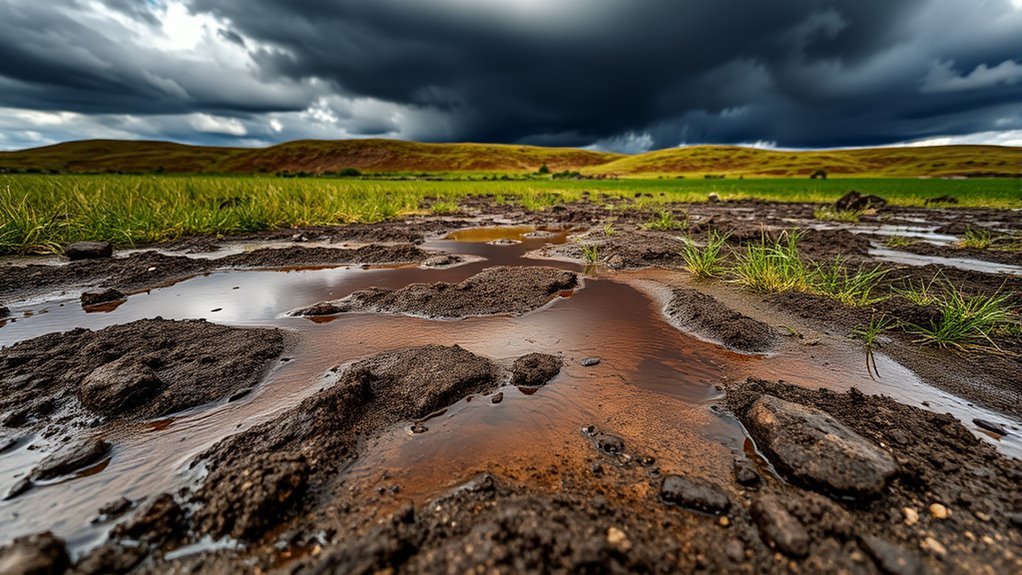
Soil saturation plays a critical role in determining the severity of flash floods during rain squalls.
When soil absorption capacity is exceeded, excess water can no longer infiltrate, leading to surface runoff.
Additionally, the presence of impermeable surfaces and the effectiveness of vegetation in facilitating drainage further influence how quickly and severely flooding can occur.
Soil Absorption Capacity
The capacity of soil to absorb water plays an essential role in determining the severity of flash floods. When rainfall exceeds the soil's absorption rate, excess water accumulates on the surface, increasing the risk of flooding.
Soil saturation, influenced by factors such as texture, structure, and organic content, dictates how much water the ground can hold. Sandy soils, for instance, typically drain faster than clay soils, which retain moisture longer.
As soils become saturated, their ability to absorb additional rainfall diminishes, leading to rapid runoff. This runoff can overwhelm drainage systems and natural waterways, contributing to flash floods in both urban and rural settings.
Understanding soil absorption capacity is crucial for effective flood risk management and planning.
Impermeable Surfaces Impact
Although urban development has brought numerous benefits, it has also introduced a notable challenge: the prevalence of impermeable surfaces. These surfaces, such as roads and buildings, greatly reduce the natural absorption of rainwater, leading to increased soil saturation and heightened risks of flash floods.
When rain squalls occur, the inability of the ground to absorb excess water creates rapid runoff, overwhelming drainage systems. This phenomenon is particularly pronounced in urban areas, where extensive impermeable surfaces dominate.
Key impacts of impermeable surfaces include:
- Increased surface runoff during heavy rainfall
- Reduced groundwater recharge
- Overburdened stormwater drainage systems
- Heightened risk of flash flooding in urban environments
Understanding these factors is essential for developing effective flood management strategies.
Vegetation's Role in Drainage
Vegetation plays a vital role in managing drainage and mitigating flash flood risks, particularly in areas affected by impermeable surfaces. The root systems of plants improve soil structure, allowing for increased absorption of rainfall. This process reduces surface runoff, as water is directed into the soil rather than flowing overland.
Additionally, vegetation intercepts rainfall through leaves, slowing its descent and facilitating gradual infiltration. In contrast, when soil becomes saturated, the capacity for further absorption diminishes, increasing the likelihood of flooding.
Effective vegetation management can greatly lower soil saturation levels, promoting healthier ecosystems and reducing flash flood potential. Therefore, integrating green spaces in urban planning can mitigate the adverse effects of rainfall and improve overall drainage efficiency.
Predicting Rain Squalls: Tools and Techniques

Advancements in radar technology, weather modeling systems, and ground observation networks play an important role in predicting rain squalls.
These tools improve the accuracy and timeliness of forecasts, allowing for better preparedness against potential flash floods.
Understanding the interplay of these techniques is essential for effective weather prediction and disaster management.
Radar Technology Advancements
As meteorologists endeavor to improve the accuracy of weather forecasts, the evolution of radar technology has become instrumental in predicting rain squalls.
Advanced radar systems offer augmented capabilities for detecting and analyzing precipitation patterns, enabling timely warnings to mitigate flash flood risks. These technologies promote improved monitoring and understanding of atmospheric conditions that lead to rain squalls.
Key advancements include:
- Doppler Radar: Analyzes wind patterns, providing perspectives into storm movement.
- Dual-Polarity Radar: Distinguishes between types of precipitation, boosting forecast accuracy.
- Phased Array Radar: Offers rapid updates, allowing for real-time tracking of storm systems.
- Mobile Radar Units: Deployable in affected areas, providing localized data for immediate response.
These innovations markedly contribute to more effective flood management strategies.
Weather Modeling Systems
While radar technology plays an essential role in detecting rain squalls, weather modeling systems are equally important for predicting their occurrence and intensity. These systems utilize complex algorithms and extensive datasets, including meteorological observations and atmospheric conditions, to simulate weather patterns.
By employing numerical weather prediction models, meteorologists can forecast the development and movement of rain squalls with greater accuracy. High-resolution models, in particular, allow for localized predictions, which are critical in urban areas prone to flash floods.
Additionally, ensemble forecasting techniques provide a range of possible outcomes, enhancing the understanding of uncertainty in predictions. Generally, integrating weather modeling systems with radar data markedly improves the ability to anticipate rain squalls, ultimately aiding in effective flood management strategies.
Ground Observation Networks
Although weather modeling systems provide important forecasts, ground observation networks play an essential role in predicting rain squalls with real-time data. These networks consist of various instruments strategically placed throughout urban and rural areas to provide localized information that improves forecasting accuracy. The data collected helps meteorologists assess potential flash flood risks effectively.
Key components of ground observation networks include:
- Rain gauges: Measure precipitation intensity and duration.
- Weather stations: Monitor temperature, humidity, and wind speed.
- Radar systems: Track storm movement and intensity.
- Satellite imagery: Offers a wider view of weather patterns.
Together, these elements contribute to a thorough understanding of rain squalls, enabling timely warnings and improved emergency responses.
Emergency Preparedness for Communities at Risk
Communities at risk of flash floods must prioritize emergency preparedness to mitigate the effects of sudden rain squalls. This involves developing thorough emergency response plans that outline clear procedures for evacuation, communication, and resource allocation.
Establishing early warning systems is essential, enabling residents to receive timely alerts about impending storms.
Additionally, community education programs should inform residents about flood risks, encouraging them to create personal emergency kits and establish family communication plans.
Local governments can collaborate with organizations to conduct regular drills, ensuring that residents understand evacuation routes and safety protocols.
Investment in infrastructure improvements, such as drainage systems, can also improve community resilience.
Engaging local volunteers in preparedness initiatives cultivates a sense of community responsibility and awareness.
In the end, a proactive approach to emergency preparedness can greatly reduce vulnerability and improve safety during flash flood events, safeguarding lives and property in both urban and rural areas.
Mitigation Strategies to Reduce Flash Flood Damage
Effective mitigation strategies can greatly reduce the impact of flash floods on communities. These strategies focus on improving infrastructure, enhancing community awareness, and implementing sustainable practices. By proactively addressing potential flood risks, communities can minimize damage and protect lives.
Key strategies include:
- Improving drainage systems: Ensuring that stormwater drains and culverts are adequately sized and maintained can prevent water accumulation during heavy rainfall.
- Establishing green spaces: Creating parks and green roofs can absorb excess rainwater, reducing runoff and easing pressure on drainage systems.
- Implementing early warning systems: Utilizing technology to provide timely alerts can help residents prepare for impending flash floods, allowing for safe evacuations.
- Promoting community education: Increasing awareness about flood risks and preparedness measures enables residents to take proactive steps in protecting themselves and their properties.
Through these strategies, communities can effectively mitigate the adverse effects of flash floods.
Common Questions
How Do Rain Squalls Differ From Regular Thunderstorms?
Rain squalls are defined by sudden, intense bursts of rain and strong winds, often occurring without the thunder and lightning typical of regular thunderstorms. Their rapid onset can lead to brief, heavy precipitation events.
What Are the Warning Signs of an Impending Rain Squall?
The signs of an impending rain squall include sudden temperature drops, darkening skies, increased wind speeds, and the appearance of towering cumulus clouds. These indicators often precede heavy rainfall and gusty winds characteristic of squalls.
Can Rain Squalls Occur During Winter Months?
Rain squalls can indeed occur during winter months, though they are less common than in warmer seasons. These sudden bursts of intense precipitation may lead to hazardous conditions, particularly when combined with cold temperatures and snow.
How Do Local Weather Patterns Influence Rain Squall Frequency?
Local weather patterns greatly influence rain squall frequency by altering atmospheric conditions. Variations in temperature, humidity, and wind direction create environments conducive to the development of these intense, short-lived storms, impacting their occurrence and intensity.
What Community Resources Are Available During Flash Flood Emergencies?
During flash flood emergencies, communities typically rely on resources such as local emergency services, shelters, evacuation plans, crisis hotlines, and public announcements to guarantee safety and provide assistance to affected residents in both urban and rural areas.